What if we designed economies to serve places, rather than places to serve economies?
Lessons from Zita Cobb, Shorefast and Fogo Island on rethinking economic development, local ownership and the value of place.
What if the success of economic development wasn't measured primarily by how much investment we attracted, how many jobs we created or how much our economy grew, but by how much value remained in the communities that generated it?
This week at the Economic Development Australia National Conference in Hobart, Zita Cobb, Founder and CEO of Shorefast, shared the extraordinary story of Fogo Island, Newfoundland, Canada.
Her presentation, Economic Momentum for More People and More Places, challenged some of the fundamental assumptions underpinning economic development. It was a powerful reminder that economic growth and community prosperity are not necessarily the same thing.
At Sparrowly Group, we spend much of our time working with regional communities, local governments, businesses and industries to identify economic opportunities and turn them into practical outcomes. From remote Queensland communities to regional tourism destinations, agricultural businesses and emerging industry clusters, we regularly encounter the same challenge: how do we create economic activity that genuinely benefits the people and places where it occurs?
Zita's presentation brought that question into sharp focus. And it reinforced something central to our work: economic development isn't simply about generating more economic activity. It's about understanding who benefits, who owns the assets, where the money goes and what remains for future generations.
1. It matters who owns what
One of Zita's most compelling observations was also one of her simplest:
"It matters who owns what."
Fogo Island's economic history was built around fishing. For generations, families made their livelihoods from the North Atlantic cod fishery, drawing on extraordinary local knowledge, craftsmanship and community relationships.
Industrial fishing fundamentally disrupted that economy. The collapse of traditional livelihoods threatened not only employment but the cultural knowledge and identity of entire communities.
What helped Fogo Island survive was collective action. In 1967, islanders established a fishing cooperative, creating a locally owned enterprise that could make decisions in the interests of the island rather than distant shareholders.
That distinction matters.
A company headquartered elsewhere might optimise its operations by moving processing, employment and profits to another location. A locally owned cooperative has a different set of incentives. It can consider employment, community wellbeing, local capability and the long-term future of the place.
This doesn't mean external investment is undesirable. Regional Australia needs investment, expertise and access to markets.
But it does mean we need to ask better questions about investment.
Who owns the productive assets?
Who makes the decisions?
Where do profits go?
How much local employment and procurement is generated?
What capabilities remain in the community?
What happens when commercial conditions change?
At Sparrowly Group: This thinking is central to our approach to economic development strategies, investment opportunities and regional industry development.
In our work with communities such as Quilpie Shire in Outback Queensland, we examine how agriculture, resources, tourism and local businesses contribute to the economy, but also how those industries interact with one another.
An industry can generate substantial economic output without necessarily creating strong connections to the surrounding community.
The opportunity is often not to attract an entirely new industry, but to strengthen the relationships, supply chains, services and business opportunities associated with industries already operating locally.
For economic development professionals, the lesson is clear: investment attraction needs to be accompanied by local value creation and retention.
2. Start with what a place already knows, has and loves
Shorefast's approach builds on asset-based community development, but extends it by explicitly considering how local assets connect to commercial opportunities.
Zita described five questions: What do we know? What do we have? What do we love? What do we miss? What can we do about it?
The most important word is we. These questions recognise that communities possess forms of capital that rarely appear in conventional economic development datasets.
Cultural knowledge. Relationships. Traditions. Landscapes. Skills. Identity. A sense of belonging.
These assets are often difficult to quantify, yet they can be extraordinarily valuable.
On Fogo Island, traditional boatbuilding, woodworking, textile production and hospitality became foundations for new commercial activities.
Rather than importing a generic tourism development model, Shorefast drew on the island's distinctive capabilities to create something that could not be replicated elsewhere.
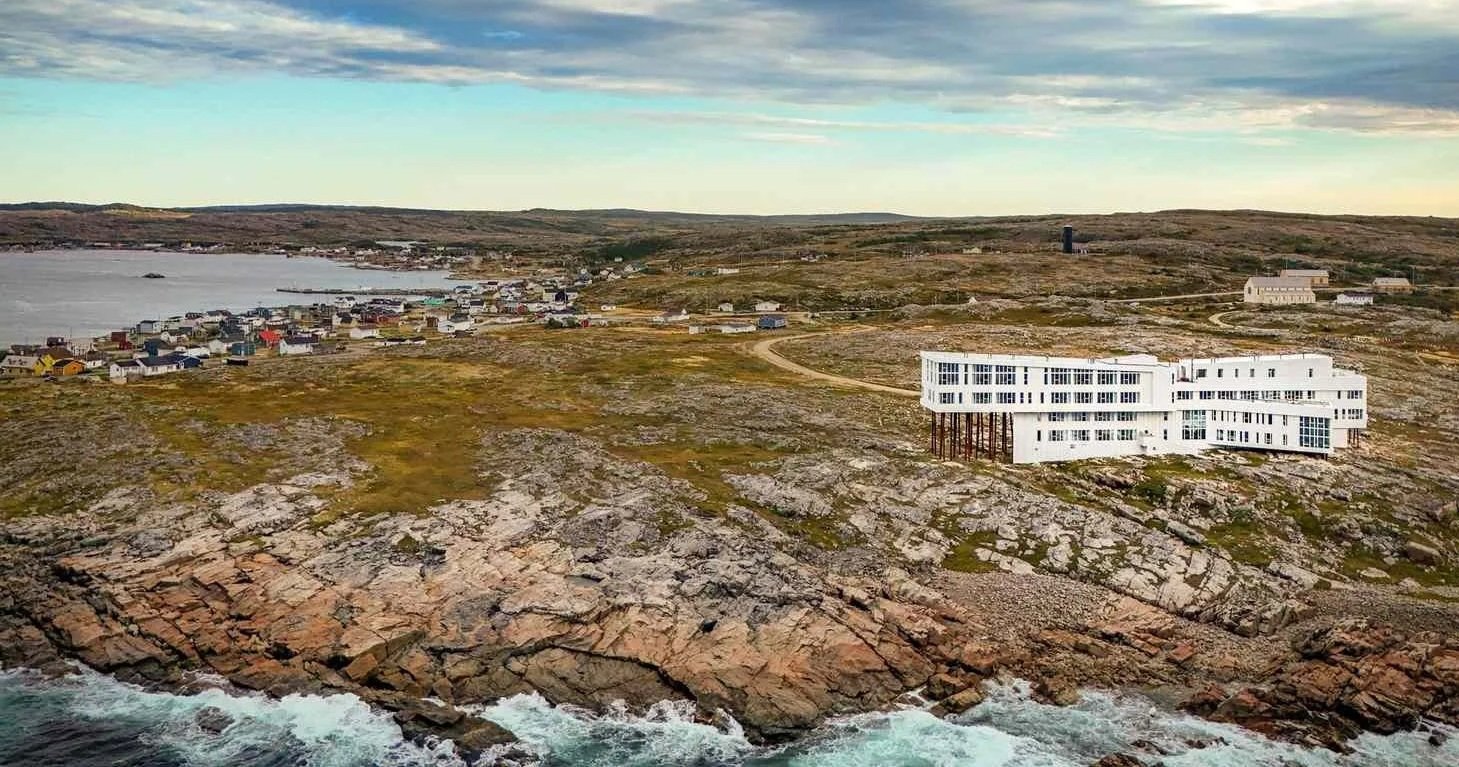
The result included internationally recognised artist residencies, contemporary architecture, furniture production and the remarkable Fogo Island Inn.
At Sparrowly Group: This is how we approach destination development, agritourism and regional economic opportunities.
We regularly work with farmers, producers, tourism operators and regional communities that underestimate the commercial value of their existing knowledge and experiences.
A cattle farmer's understanding of livestock production, a producer's knowledge of growing food, a community's industrial heritage or a landscape shaped by generations of local activity can all become the foundations for new visitor experiences, products and enterprises.
But identifying an asset is only the beginning.
The commercial challenge is connecting that asset with customers, developing the right product, establishing a viable business model and building the capability to deliver it.
That connection between place-based assets and markets is essential.
The lesson: Economic development should begin with what makes a place distinctive, then determine how that distinctiveness can create sustainable commercial and community value.
3. Tourism must serve the community, not consume it
Zita described tourism as a "dance with the devil".
It was one of the most provocative observations of the presentation, particularly for those of us working in the visitor economy.
Tourism can create jobs, support local businesses, attract investment and introduce visitors to a community's culture and environment.
But poorly managed tourism can also place pressure on housing, infrastructure, local services and the very characteristics that attracted visitors in the first place.
Zita argued that tourism should not become a community's only industry and that its scale must be appropriate to the place.
The Fogo Island Inn demonstrates an alternative approach. Opened in 2013, the 29-room inn was developed as a social enterprise, with its operations supporting Shorefast's broader community objectives.
The building itself is extraordinary, but the economic model is arguably more important.
Local people were involved in making furniture, producing textiles, building the property, supplying food and delivering hospitality.
The inn was designed to create economic activity throughout the island, rather than simply generate revenue within the accommodation business.
Shorefast also developed Economic Nutrition labelling, inspired by nutritional labels on food products, to demonstrate where money goes. Zita explained that 54% of the price of a stay at the inn remains on Fogo Island, with further expenditure circulating through Newfoundland and Canada.
Imagine if we routinely measured tourism success this way.
Not simply by visitor numbers, occupancy rates and visitor expenditure, but by how much spending remains locally, how many local businesses participate in supply chains and whether tourism improves the lives of residents.
At Sparrowly Group: This is particularly relevant to our destination management planning and visitor experience development work.
We advocate for tourism development that is commercially viable, appropriate to the destination and connected to local business opportunities.
For example, developing an agritourism experience is not simply about encouraging more visitors onto a farm. It involves understanding the business model, operational requirements, customer demand, pricing, workforce capacity and the relationships with other local businesses.
Likewise, major tourism infrastructure should not be assessed only on construction costs and projected visitation. It must also consider who will operate it, who will maintain it, who will pay for it and whether it creates lasting benefits for the community.
The lesson: Visitor expenditure is not the same as local economic benefit. We need to understand where the money flows and what it leaves behind.
4. Economic development needs a stewardship table
One of the most practical elements of Zita's presentation was the Shorefast Framework for Economic Development.
At its centre is a Coordination and Stewardship Table, supported by four interconnected elements:
Data - understanding the local economy, its assets, businesses, industries and economic relationships.
Economic literacy - building the ability of community leaders, businesses and residents to understand how economic systems work.
Financial capital - identifying and connecting the funding and investment required to develop opportunities.
Policy - understanding and influencing the policy settings that enable or constrain local economic development.
Zita emphasised that coordination drives these elements together. They are not sequential tasks, but interconnected parts of a functioning local economic system.
The stewardship table brings together local government, businesses, institutions, community organisations, education providers and other economic actors.
This addresses a fundamental problem.
When we ask who is responsible for a local economy, the answer is often unclear.
Local governments is expected to lead economic development, but councils do not control the investment decisions, employment practices, supply chains or commercial activities of every business in their region.
Nor should they.
A functioning regional economy depends on multiple organisations making decisions, investing, collaborating and accepting responsibility for their contribution to the place.
At Sparrowly Group: We see local government's most effective economic development role as facilitator, connector, advocate and enabler, rather than default operator of commercial enterprises.
Our economic development planning work emphasises clearly defined roles for councils, businesses, industry, community organisations and other levels of government.
We also apply collaborative approaches in industry development, particularly through cluster development methodologies that bring firms, institutions, research organisations and government together around shared economic opportunities.
The challenge is to move beyond consultation towards genuine coordination and shared action.
The lesson: Economic development strategies need more than action plans. They need the relationships, governance arrangements and delivery capability to make things happen.
5. Economic literacy is an economic development tool
Zita made another important observation: many communities do not fully understand how their own economies function.
They may know their major employers or industries, but not necessarily understand where money enters the economy, where it leaves, how businesses connect or what policy and investment decisions influence their future.
This lack of economic literacy can limit the ability of communities to identify opportunities or participate meaningfully in decisions affecting them.
Shorefast's approach seeks to build economic understanding at multiple levels, from individual and household finances through to business operations, regional economies and global financial systems.
This matters because economic development cannot be something done to a community by consultants, governments or external investors.
People need the knowledge and confidence to participate.
At Sparrowly Group: Capability building is a substantial part of our work. Through business mentoring, training, industry development and strategic planning, we help business owners and communities better understand their markets, costs, pricing, operations, opportunities and commercial decisions.
For many small businesses, understanding profitability, customer segments, cash flow or the cost of delivering a new experience can be transformative.
At a regional level, economic literacy also means helping decision-makers understand industry structures, business needs, workforce constraints, infrastructure requirements and the relationships between different parts of the economy.
Data is important, but data alone does not create change.
The real value comes when people can interpret the information and use it to make better decisions.
The lesson: Building economic capability should be treated as a core economic development outcome, not simply an accompanying activity.
6. Build the connective tissue, not just the individual projects
Zita introduced a memorable concept she called cauliflower thinking.
A cauliflower has individual florets, but they depend on the stem to hold them together and provide nourishment.
Communities operate in much the same way.
Individual businesses, institutions, households and organisations may be capable of functioning independently, but their collective success depends on the connections between them.
The role of economic development is not simply to grow each individual floret.
It is to strengthen the connective tissue that allows the whole community to function.
This is particularly relevant in regional Australia, where businesses often operate with limited resources, small workforces and considerable distances between markets.
A new business may be valuable, but a network of businesses sharing knowledge, customers, infrastructure and opportunities can create much greater collective benefit.
At Sparrowly Group: We see this through our regional industry development, business mentoring and tourism collaboration work.
A farm experience becomes more commercially attractive when it connects with accommodation providers, food businesses, tour operators and regional marketing channels.
A regional industry becomes more competitive when businesses collaborate on workforce development, infrastructure, research and market access.
A destination becomes more compelling when individual visitor experiences are connected into a coherent regional offering.
This is also why economic development professionals need to understand the spaces between organisations, not simply the organisations themselves.
The lesson: Some of the highest-value economic development work is not delivering another project. It is creating the relationships that enable many projects and businesses to succeed.
7. Measure what matters, including what we might lose
The presentation also challenged how we think about risk.
Zita explained that when people questioned the risk of developing Fogo Island Inn, they generally meant financial risk.
Her greater concern was the risk of doing nothing.
Without new economic opportunities, Fogo Island faced the potential loss of population, cultural knowledge, identity and community life.
This changes the way we should assess economic development decisions.
Conventional investment appraisal often focuses on financial returns, construction costs, operating performance and measurable economic impacts.
These are essential considerations. Financial viability cannot simply be ignored.
But they are not the complete picture.
What is the cost of losing a local service?
What happens when a regional business closes and there is no successor?
What is the long-term impact of young people leaving because they cannot find employment or housing?
What cultural knowledge disappears when an industry or community loses its practitioners?
And what economic opportunities are never realised because a community lacks the confidence, capability or connections to pursue them?
At Sparrowly Group: Our work regularly involves identifying opportunities that conventional market assessments may overlook.
In smaller regional economies, modest interventions can have disproportionately important effects. Supporting the continuation of a local business, helping a farmer establish an additional income stream or improving collaboration between existing industries can make a meaningful difference.
However, this also requires discipline. Not every opportunity should proceed, and community benefit does not eliminate the need for sound business planning.
The objective is to understand the full range of costs, benefits and risks before making decisions.
The lesson: Economic development professionals should measure financial performance alongside local ownership, economic participation, business capability, cultural value and long-term community outcomes.
8. Development is not the same as investment
Perhaps the most important distinction from the presentation was Zita's challenge to the meaning of development itself.
Investment is the allocation of capital. Development is the process of strengthening something that already has inherent value and potential. The two can reinforce one another, but they are not interchangeable.
A region can attract investment without necessarily strengthening its local economy. A major project may create substantial construction activity but limited ongoing employment. A new tourism development may increase visitation while creating pressure on housing or local infrastructure. An industry may increase output without strengthening local businesses or supply chains.
Conversely, developing local capabilities, strengthening institutions, improving collaboration and supporting entrepreneurship can create the conditions for future investment.
At Sparrowly Group: We see investment attraction as one part of economic development, rather than its defining purpose.
Our work connects strategic planning with business development, industry capability, visitor experience design, market opportunities and implementation.
The emphasis is on creating the conditions in which businesses and communities can generate value over time.
The lesson: We should stop treating investment announcements as the final measure of economic development success. The more important question is what that investment enables and what enduring value it creates.
What economic development professionals can take from Fogo Island
Zita's presentation offers a useful challenge to the profession.
We have become very good at preparing strategies, identifying investment opportunities, producing economic impact assessments and measuring growth.
But perhaps we need to spend more time examining the underlying economic relationships that determine whether growth translates into community prosperity.
There are several practical questions worth taking back to our organisations and communities:
Ownership: Who owns the assets and enterprises that generate local economic value?
Retention: How much economic activity stays in the community, and how much leaves?
Participation: Who is involved in shaping the economy and who is excluded?
Capability: Are we strengthening the ability of local people and businesses to participate in economic opportunities?
Coordination: Who is bringing the economic actors together and maintaining momentum?
Identity: Are new developments strengthening what makes the place distinctive or gradually eroding it?
Accountability: Are we measuring outcomes that matter to the community, beyond headline economic indicators?
These are not alternatives to conventional economic development measures. They are essential additions.
They also demand a longer-term perspective. Some of the most valuable outcomes of economic development, including stronger relationships, local capability, confidence and institutional knowledge, take years to build.
The opportunity for regional Australia
Fogo Island is a small, remote community with considerable geographic and economic challenges.
Yet Shorefast has demonstrated how local ownership, cultural knowledge, commercial enterprise, design, community participation and long-term stewardship can combine to create a distinctive economic model.
The presentation included reported outcomes of more than CAD $270 million in cumulative economic impact between 2013 and 2025, more than 240 jobs on Fogo Island in 2025 and a 74% reduction in outmigration.
These figures are significant, but the deeper achievement is the demonstration that a remote community can actively shape its economic future rather than simply accept the consequences of decisions made elsewhere.
Australia has extraordinary opportunities to apply similar thinking.
Our regional communities possess distinctive landscapes, industries, knowledge, culture, businesses and people.The challenge is not always a shortage of assets or opportunities.
Often, it is the absence of the connections, capability, investment structures and coordination required to turn those assets into enduring economic value.
At Sparrowly Group, this is the work we believe economic development should be doing: understanding places, identifying their potential, connecting people and markets, strengthening businesses and creating practical pathways for local prosperity.
Zita's presentation reinforced why this matters.
The purpose of economic development should not be to make every place more economically productive at any cost. It should be to help places become more capable of supporting the people, businesses, cultures and environments that make them worth living in.
And perhaps that is the question we should ask at the beginning of every economic development strategy:
Are we developing the economy of this place, or are we developing this place through its economy? The distinction matters.